Charli XCX Is Not Who She Used To Be
Charli XCX Is Not Who She Used To Be
Music, Fashion, Film, Philosophy
Music, Fashion, Film, Philosophy
Charli XCX released her latest album Music, Fashion, Film, a sardonic and multilayered pop-rock record that feels like a slumber party at the end of the world. The record is cinematic, and places her personal evolution in the context of her exchange with the world around her, with songs that don’t shy away from the disjunctions in our relationships and identities.
Charli XCX released her latest album Music, Fashion, Film, a sardonic and multilayered pop-rock record that feels like a slumber party at the end of the world. The record is cinematic, and places her personal evolution in the context of her exchange with the world around her, with songs that don’t shy away from the disjunctions in our relationships and identities.
By Alexis Pearman
By Alexis Pearman
July 26, 2026
July 26, 2026
Charli XCX in the SS26 music video
Charli XCX in the SS26 music video
Card Declined comments on commodity fetishism driving us to consume more in order to find fulfillment– to buy “a whole new life”. The track encapsulates the dichotomy of the album, with an outro that diverges both sonically and tonally from the rest of the song. The track starts with heavy guitar, and a disaffected voice suggesting, “Let's go shopping, I’ll buy a handbag.” She goes through the rest of her shopping list, which includes perfume, a smile, and a personality. A heavy synth takes over like music from a horror film, changing the invitation to go shopping from apathetic into something hypnotic and sinister. The end of the track takes a sharp pivot, with an upbeat guitar and a lovestruck tone singing "I've been thinking ‘bout you, every single day.” We aren't sure if the protagonist has moved on from her nihilistic shopping spree, or if she's still just singing about shoes.
Card Declined comments on commodity fetishism driving us to consume more in order to find fulfillment– to buy “a whole new life”. The track encapsulates the dichotomy of the album, with an outro that diverges both sonically and tonally from the rest of the song. The track starts with heavy guitar, and a disaffected voice suggesting, “Let's go shopping, I’ll buy a handbag.” She goes through the rest of her shopping list, which includes perfume, a smile, and a personality. A heavy synth takes over like music from a horror film, changing the invitation to go shopping from apathetic into something hypnotic and sinister. The end of the track takes a sharp pivot, with an upbeat guitar and a lovestruck tone singing "I've been thinking ‘bout you, every single day.” We aren't sure if the protagonist has moved on from her nihilistic shopping spree, or if she's still just singing about shoes.
The first two songs introduce this duality as XCX sings about making rock music with her friends now that the dance floor is dead, but simultaneously observes the futility in this newfound inspiration as the world crumbles around her. She reflects on her use of fashion as an escape, in “SS26” admitting, “nothing's going to save us, not music, fashion, or film” – even though it does make her feel better to wear a really cute outfit. She perfectly captures the disillusionment and shamelessness native to this hyper-yet-disconnected era.
The first two songs introduce this duality as XCX sings about making rock music with her friends now that the dance floor is dead, but simultaneously observes the futility in this newfound inspiration as the world crumbles around her. She reflects on her use of fashion as an escape, in “SS26” admitting, “nothing's going to save us, not music, fashion, or film” – even though it does make her feel better to wear a really cute outfit. She perfectly captures the disillusionment and shamelessness native to this hyper-yet-disconnected era.
Charli XCX is no stranger to work that explores the friction between art and audience, herself and fame. Her film, The Moment, was a takedown of her brat era, an album that sent her into the stratosphere of mainstream stardom. The film explores the pressures of staying, that follow making it to the top – which can compromise yourself and the original point of your success. If brat was a moment, Music, Fashion, Film, is the soundtrack of its evolution and what is left behind as we grow.
Charli XCX is no stranger to work that explores the friction between art and audience, herself and fame. Her film, The Moment, was a takedown of her brat era, an album that sent her into the stratosphere of mainstream stardom. The film explores the pressures of staying, that follow making it to the top – which can compromise yourself and the original point of your success. If brat was a moment, Music, Fashion, Film, is the soundtrack of its evolution and what is left behind as we grow.
Each track plays like a novella in the album’s exploration of duality. “Wink Wink” distinguishes between her and her public persona, cheekily admitting some aspects are “just for effect.” In “2007,” her most electro-pop song on the album, she confronts an old version of herself over a beat that makes you feel like you are in an old Brittany Spears (or Charli XCX) music video.
The mood turns introspective and angsty as we look in the mirror to understand ego and performance in our intimate relationships. In “Persona,” like the film of the same name, she takes us through the uncanny and spellbinding effect of seeing ourselves in others. I immediately added this generational banger to my “Hard Feelings / Loveless” playlist.
“You think you’re so clever, I think you are too”
“I know you see me, when I see you”
One of my favorites, “Camera,” is momentous as she confronts her doubts about the future. Is it too late to start over, to try something entirely new and dare to fail? She resolves that uncertainty shouldn’t govern how you move forward, as you’ll never know how things will turn out, but what you can know is “how it makes me feel.”
The album is for a girl at a crossroads, shedding her old self to become someone new. It operates like a break up story, ending in a self-possessed and dramatic final scene, talking philosophy with Parisians, where she determines “nothing’s going to last forever.” This letting go is a surrender to her inevitable evolution into the next version of herself – and the one after that – fading out with the voice of David Cronenberg confirming “no one lasts forever.”


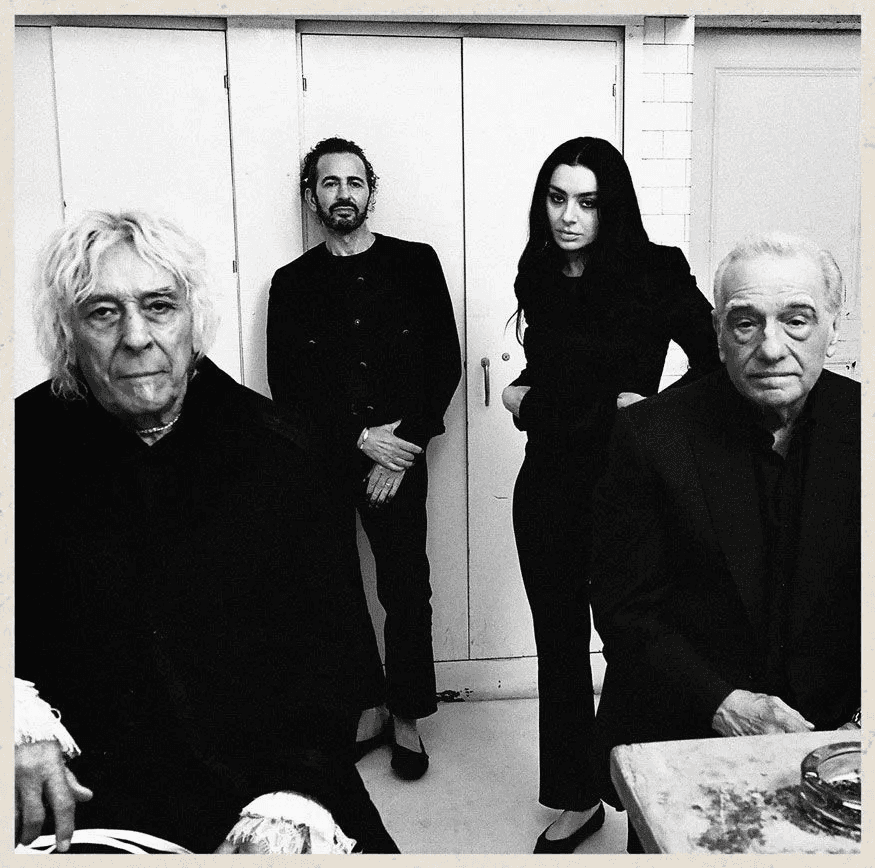
John Cale, Marc Jacobs, Charli XCX and Martin Scorsese
John Cale, Marc Jacobs, Charli XCX and Martin Scorsese
Charli XCX in The Moment, removing brat with a makeup wipe
Each track plays like a novella in the album’s exploration of duality. “Wink Wink” distinguishes between her and her public persona, cheekily admitting some aspects are “just for effect.” In “2007,” her most electro-pop song on the album, she confronts an old version of herself over a beat that makes you feel like you are in an old Brittany Spears (or Charli XCX) music video.
Charli XCX in The Moment, removing brat with a makeup wipe
The mood turns introspective and angsty as we look in the mirror to understand ego and performance in our intimate relationships. In “Persona,” like the film of the same name, she takes us through the uncanny and spellbinding effect of seeing ourselves in others. I immediately added this generational banger to my “Hard Feelings / Loveless” playlist.
“You think you’re so clever, I think you are too”
“I know you see me, when I see you”
One of my favorites, “Camera,” is momentous as she confronts her doubts about the future. Is it too late to start over, to try something entirely new and dare to fail? She resolves that uncertainty shouldn’t govern how you move forward, as you’ll never know how things will turn out, but what you can know is “how it makes me feel.”
The album is for a girl at a crossroads, shedding her old self to become someone new. It operates like a break up story, ending in a self-possessed and dramatic final scene, talking philosophy with Parisians, where she determines “nothing’s going to last forever.” This letting go is a surrender to her inevitable evolution into the next version of herself – and the one after that – fading out with the voice of David Cronenberg confirming “no one lasts forever.”